


The Complete Guide to Red Light Therapy for Skin Rejuvenation
Last Updated: November 12, 2026
Quick Summary
Red light therapy for skin rejuvenation is a non-invasive treatment that exposes skin to red and near-infrared light to support cellular function and collagen production. Expect eight to twelve weeks of consistent use before structural change is visible, and treat it as a supporting tool rather than a replacement for dermatologic care.
- Red light around 630-660 nm targets the epidermis and upper dermis, while near-infrared at 810-850 nm penetrates deeper.
- In an AAD-cited facial LED study, more than 90% of participants noticed some improvement after eight treatments over four weeks.
- Side effects are uncommon and typically mild: transient redness, warmth, and occasional dryness in the treated area.
- Run sessions of 10-15 minutes, 4-5 times per week, at six to eight inches for facial sessions.
- Wait five to seven days after a laser, peel, or microneedling session before resuming panel sessions.
Table of Contents
- How Red Light Therapy Works for Skin Rejuvenation
- Red Light Therapy for Skin Rejuvenation Benefits
- What the Clinical Evidence Says, and Where It Stops
- Red Light Therapy for Skin Rejuvenation Side Effects and Safety
- Red Light Therapy for Skin Rejuvenation at Home
- Red Light Therapy Before and After: Setting Realistic Expectations
- A Safe At-Home Protocol, Step by Step
- Pairing Red Light Therapy With Skincare and In-Office Procedures
- Building Your Skin Rejuvenation Setup With Serenity Lane USA
- Frequently Asked Questions
How Red Light Therapy Works for Skin Rejuvenation
Red light therapy for skin rejuvenation is a non-invasive treatment that exposes skin to specific wavelengths of red and near-infrared light to support cellular function and collagen production.
Below, we break down the mechanism, the evidence, the safety considerations, and how to build a protocol that actually fits your life.
The honest version: light alone is not a facelift. But the research on cellular response is real, and the gap between a good device and a bad one is wider than most buyers realize.
Photobiomodulation, Wavelengths, and Cellular Energy
Photobiomodulation is the process by which red and near-infrared light is absorbed by mitochondria, the energy-producing structures inside cells, to support ATP production and cellular function.
Wavelength determines depth and target. Red light around 630-660 nm is absorbed primarily in the epidermis and upper dermis, where fibroblasts sit. Near-infrared light at 810-850 nm penetrates deeper, reaching muscle and joint tissue.
The 2026 product review published in a peer-reviewed panel guide on PubMed Central notes that certain wavelengths penetrate deeply and may stimulate collagen production, reduce inflammation, and support healing.
Red Light Therapy for Skin Rejuvenation Benefits
Benefits reported in the literature cluster into two groups: structural changes tied to collagen and elastin, and inflammatory changes tied to redness, acne, and healing. The evidence is not equally strong across those groups, and the single most useful thing a reader can do is separate promising findings from established ones. Below is how the evidence grades out by concern, with the study-quality caveats that most marketing pages omit.
A controlled trial by Wunsch and Matuschka (2014) on large-area light treatment examined the safety and efficacy of two light sources for full-body application. It is one of the better-designed early studies in the field, though the sample was small by pharmaceutical standards, a limitation that applies to most of the human data in this category. Small samples, short follow-up, and inconsistent device specifications mean that a positive result is a signal, not a guarantee.
Collagen, Elastin, and the Appearance of Fine Lines
Collagen and elastin are the structural proteins that keep skin firm. Fibroblasts produce them, and fibroblast activity declines with age and sun exposure. Red light therapy aims to stimulate that activity, and the mechanism is plausible: photons are absorbed by mitochondrial cytochrome c oxidase, which supports ATP production and downstream signaling associated with collagen synthesis.
The most-cited human data comes from the American Academy of Dermatology, which reports that in a study of facial red-light LED treatment, more than 90% of participants noticed some improvement after eight treatments over four weeks. That is a striking number, and it comes with a caveat the AAD itself raises: at-home results are difficult to measure, and more research is needed. The study relied on participant-reported improvement rather than blinded clinical grading, which matters because expectations can influence how people rate their own skin.
What most guides miss is the timeline and the dose question. Collagen remodeling is slow. Expect eight to twelve weeks of consistent use before structural change is visible, not eight days.
Redness, Acne, Scarring, and Skin Healing
Inflammation-driven concerns respond faster than structural ones. Red light's effect on inflammatory pathways means redness and post-acne marks often improve before fine lines do.
Acne is a useful example of how to read the evidence carefully. Red light is typically studied as an adjunct to standard acne care, not a replacement.
Scarring is murkier. Superficial texture and redness can soften. Deep atrophic scarring from acne responds far less reliably, and no panel replaces dermatologic intervention for ice-pick or boxcar scars.
How to Read the Evidence Without Overselling It
Three questions separate a credible claim from a marketing one. First, was the study controlled and blinded? Many positive reports are open-label, meaning participants knew they were being treated. Second, what device and dose were used? A 630 nm panel at a measured irradiance is not the same as a multi-wavelength mask with unspecified output. Third, how long was follow-up?
A common pattern is that evidence is strongest for inflammatory concerns, moderate for fine lines and texture, and weak for sagging and deep scarring. That ranking should shape both your expectations and your spending.
What the Clinical Evidence Says, and Where It Stops
The evidence base is promising but not conclusive, and the AAD says so directly. More research is needed to determine how effective red-light devices are for skin concerns. Anyone selling you certainty is overselling.
Here is how the evidence grades out by concern:
| Skin Concern | Evidence Strength | Typical Timeline | Notes |
|---|---|---|---|
| Redness and inflammation | Moderate | 2-4 weeks | Most consistent early response |
| Fine lines and texture | Moderate | 8-12 weeks | Tied to collagen remodeling |
| Acne lesions | Moderate | 4-8 weeks | Adjunct, not a replacement for treatment |
| Post-acne redness | Moderate | 4-8 weeks | Responds with consistent use |
| Deep atrophic scarring | Weak | 12+ weeks | Limited response; consider in-office options |
| Sagging skin | Weak | 12+ weeks | Modest at best; not a lifting substitute |
One critical distinction: red light therapy is not photodynamic therapy. Stanford Medicine's 2025 review describes photodynamic therapy as red light at a specific wavelength combined with a topical drug to kill skin cells. That is a different treatment with a different mechanism.
Red Light Therapy for Skin Rejuvenation Side Effects and Safety
Side effects are uncommon and typically mild: transient redness, warmth, and occasional dryness in the treated area. Unlike UV exposure, red and near-infrared light do not cause DNA damage in the way that drives photoaging.
Eye protection matters, so wear the protective glasses included with your panel. The eyes are sensitive to high-irradiance light, and sessions are not the moment to test your tolerance.
Skin Tone, Photosensitivity, and Medications
Red light therapy is generally considered safe across skin tones because it does not target melanin the way lasers do.
Photosensitizing medications are the real caution zone. Certain antibiotics, retinoids, and some acne treatments increase light sensitivity. If you take isotretinoin or a tetracycline-class antibiotic, talk to your prescriber before starting.
Watch out: Starting at maximum intensity for 20 minutes on day one can produce redness that is easily mistaken for a reaction and may discourage people from a protocol that would have worked at a gentler setting.
Red Light Therapy for Skin Rejuvenation at Home
At-home devices have made daily sessions practical, and the AAD's guidance is straightforward: check whether a device is FDA-cleared for the intended use, and expect results to vary.
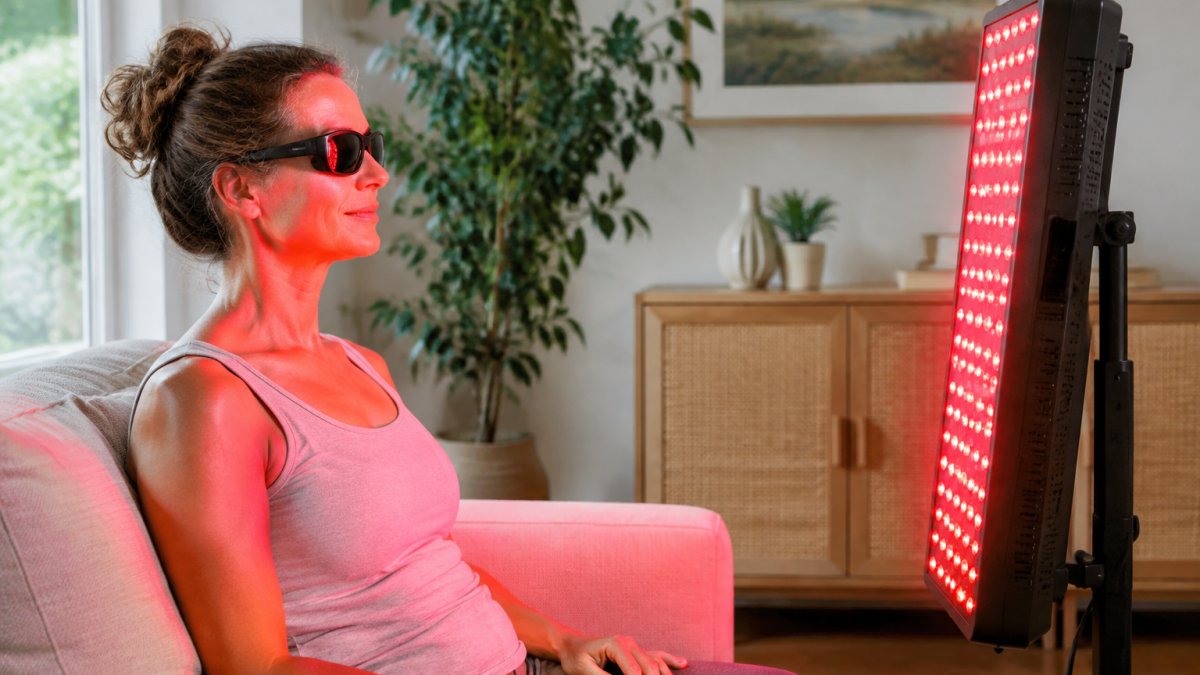
The advantage of home use is frequency. Clinical sessions run weekly at best. Home panels allow daily exposure, and consistency is the variable most strongly associated with outcomes.
How to Choose a Panel: Irradiance, Wavelengths, and Coverage
Most buyers compare wattage and price. The specifications that actually determine whether a panel is worth your money are irradiance, wavelength range, coverage area, and how honestly the manufacturer reports them.
- Irradiance (mW/cm²) determines dose delivery time. Higher output means shorter sessions, but only if the measurement is taken at a realistic treatment distance. A panel rated at high irradiance at the surface may deliver far less at twelve inches. Look for measured values at the distance you will actually use, and be wary of numbers that do not state a distance.
- Wavelengths should include 630-660 nm red and 810-850 nm near-infrared for skin plus recovery goals. A single red wavelength is not automatically inferior, but dual-range output gives you more flexibility. Blue light around 415-480 nm is sometimes included for acne, though the evidence there is separate and should not be conflated with red light's collagen rationale.
- Coverage determines whether you treat your face in five minutes or your whole body in twenty. Panel size and LED count matter less than the actual illuminated area at your treatment distance. A large panel used close up may cover only your face; a smaller panel used farther away may cover more but at lower irradiance.
- Eye protection should be included and worn every session. High-irradiance panels are bright enough that staring into them is uncomfortable and potentially risky. If a device does not ship with glasses, budget for a pair.
- Regulatory clearance should be verifiable. FDA clearance for a specific intended use is a safety benchmark, not a performance guarantee, but it is a meaningful minimum. Ask for the clearance number if it is not listed.
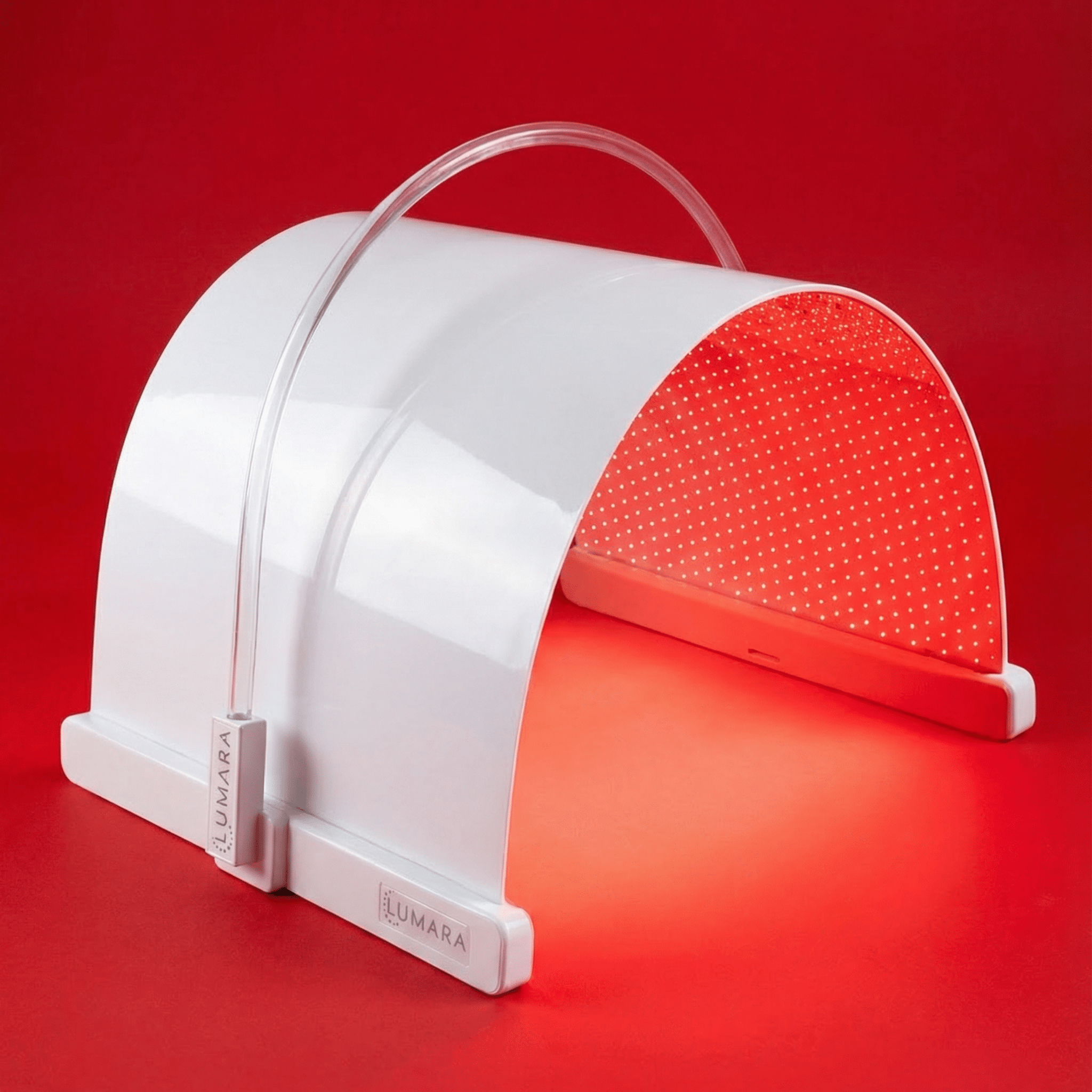
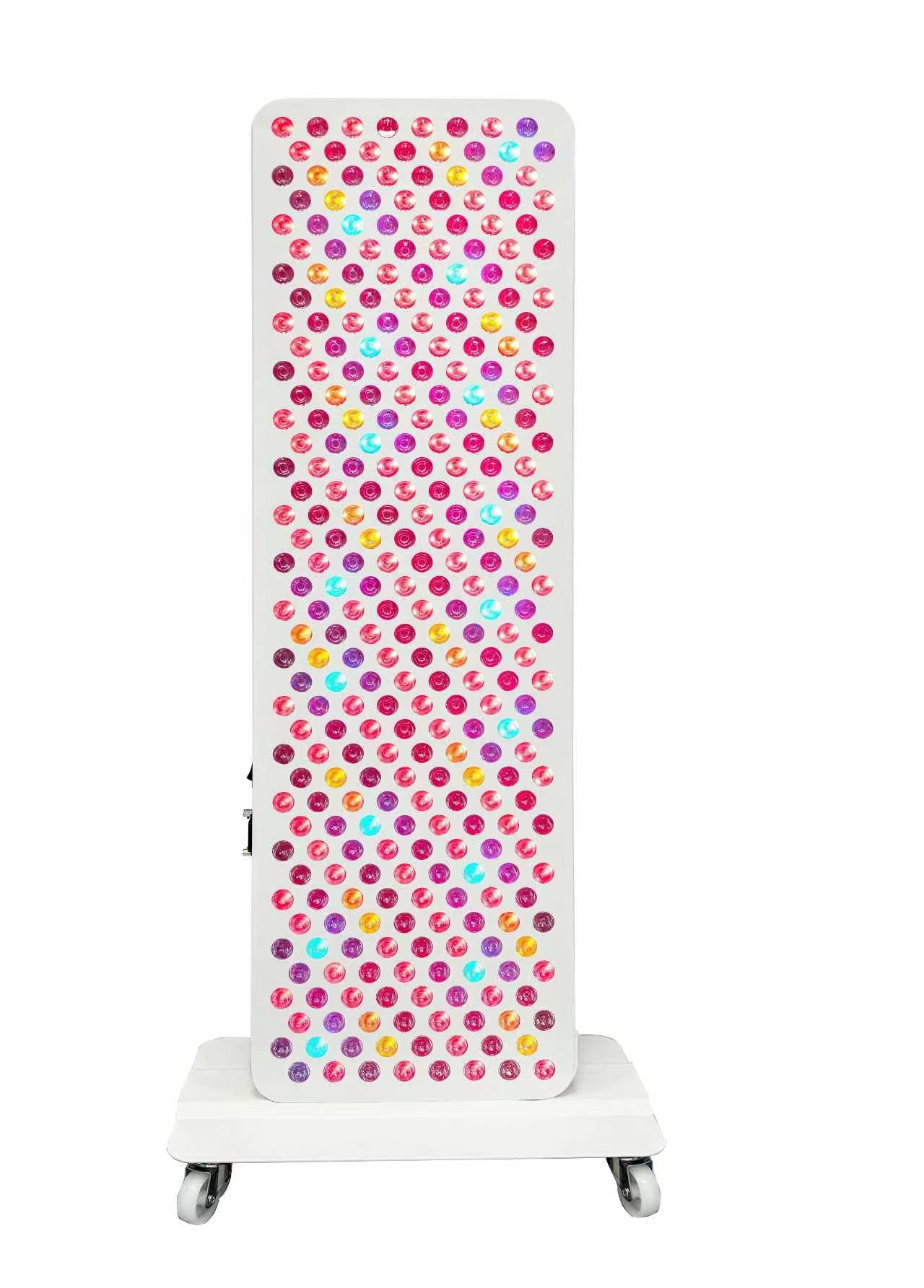
If you want a concrete starting point, the Illuminate Red V2 panel runs a 660 nm wavelength across 1,980 micro-LEDs with a five-minute session design. For buyers weighing multi-wavelength options, the Nicebeam LumaSpectrum 9 Pro covers nine wavelengths from 480 nm blue through 1060 nm near-infrared at 184 mW/cm² surface irradiance, which lets you target skin and muscle sessions with one device.
Matching the Device to Your Concern and Routine
The right device depends on what you are treating and how much time you will realistically commit. A face-only mask is convenient and easy to stick with, but it usually delivers lower irradiance and covers less area than a panel.
Watch out: buying a device based on wattage alone is the most common selection mistake. Wattage describes power draw, not delivered dose, and a high-wattage panel with poor optics or an unstated treatment distance can underperform a lower-wattage device with honest specifications.
Red Light Therapy Before and After: Setting Realistic Expectations
Red light therapy before and after photos are the least reliable content in this category. Lighting, angle, and skincare routines change between shots, and no panel produces the dramatic transformations seen in retouched marketing images.
What realistic progress looks like:
- Weeks 2-4: Subtle improvement in redness and skin tone evenness
- Weeks 4-8: Texture begins to shift; makeup sits differently
- Weeks 8-12: Fine lines soften; firmness changes are modest
- Beyond 12 weeks: Maintenance gains with continued use
A Safe At-Home Protocol, Step by Step
Total time: 10-15 minutes per session Frequency: 4-5 sessions per week
What you'll need: A panel with red and near-infrared output, protective glasses, a timer, and a consistent spot.
- Cleanse and dry your skin. Remove makeup and skincare products; light penetrates clean skin more effectively.
- Set your distance. Six to eight inches for facial sessions, eight to twelve for body areas.
- Put on protective glasses. Every session, no exceptions.
- Start at 5-10 minutes. Build to 15 over two weeks if your skin tolerates it.
- Keep your eyes closed or look away if you are treating the face without glasses.
- Log the session. Date, duration, distance, and any redness.
- Moisturize after. Light exposure can dry the skin slightly.
Expected result: Mild warmth during the session and possible faint redness for 30-60 minutes after. That is normal.
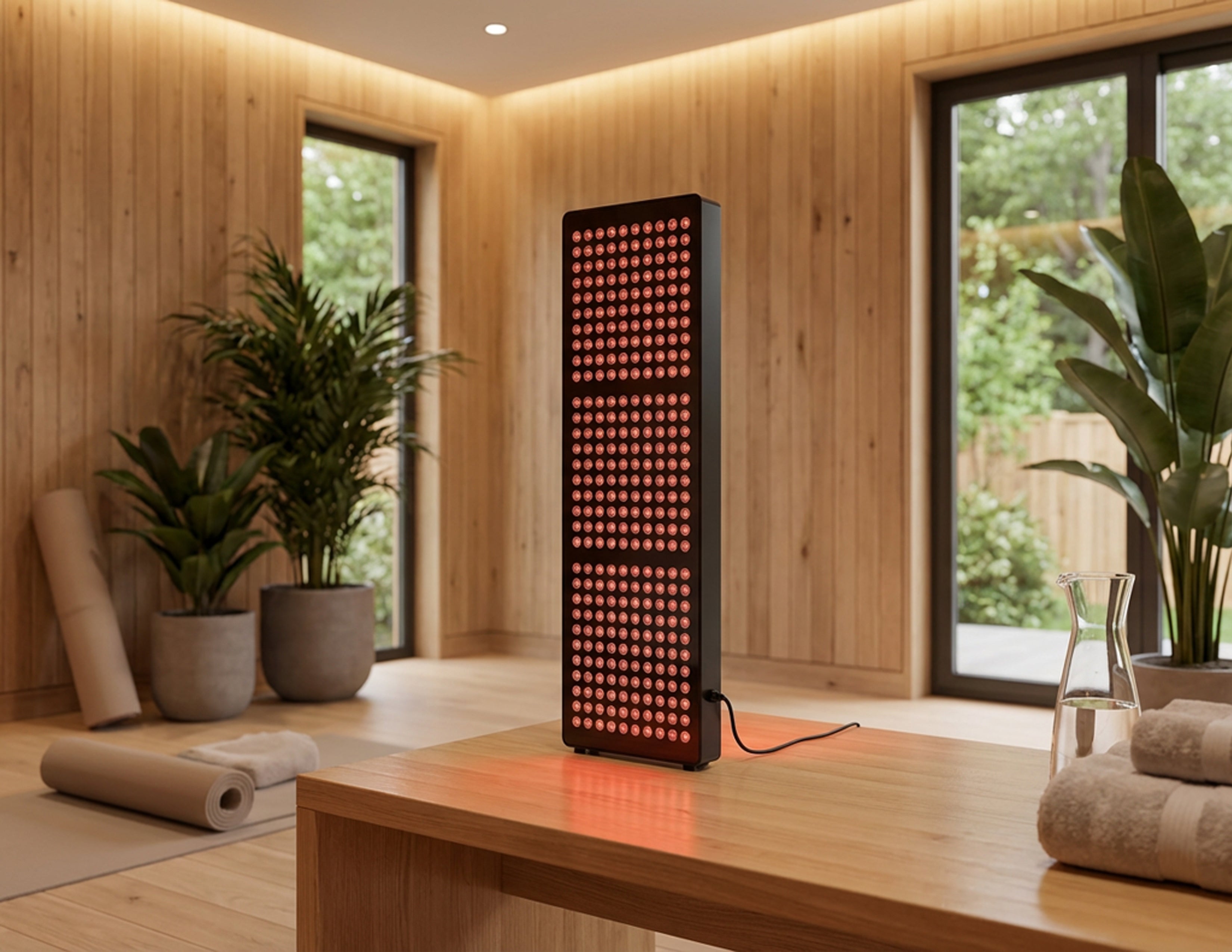
If you want a high-output panel built for full-body sessions, the 1000W Red Light Panel delivers 660 nm red and 810-850 nm near-infrared across a full-body coverage area.
Pairing Red Light Therapy With Skincare and In-Office Procedures
Sequencing matters more than most people realize. Red light therapy is generally applied to clean skin, since topical products may affect how light reaches the skin.
With in-office treatments, timing is the variable. After a laser, peel, or microneedling session, your skin barrier is compromised. Wait until your provider clears you, typically five to seven days, before resuming panel sessions.
For a full-body routine that covers skin and wellness goals together, the EXESAS 600 LED panel offers 630 nm, 660 nm, 810 nm, and 850 nm wavelengths at over 224 mW/cm² irradiance, with red and infrared modes operable separately.
The pairing that works: red light in the morning on clean skin, actives at night, and in-office procedures spaced at least a week apart from your panel routine.
Building Your Skin Rejuvenation Setup With Serenity Lane USA
Consistency matters more than intensity in this category, and equipment you will actually use makes consistency realistic.
We carry professional-grade red light panels built for daily home use.
For readers ready to commit to a full-body setup, the EXESAS 1216 LED panel delivers 630 nm, 660 nm, 810 nm, and 850 nm across 1,216 dual-chip LEDs at over 224 mW/cm², with a 75-inch panel and base stand.
Build the routine, protect your eyes, start gentle, and give your skin twelve weeks before you judge it.
The panel you choose matters less than whether you use it next Tuesday. Pick one that fits your space, your schedule, and your budget, then treat the sessions like brushing your teeth.
Frequently Asked Questions
Does red light therapy really work for skin rejuvenation?
The evidence is promising but not conclusive. The American Academy of Dermatology reports that in one study of facial red-light LED treatment, more than 90% of participants noticed some improvement after eight treatments over four weeks. At the same time, the AAD says more research is needed and that at-home results can be hard to measure. Treat red light therapy as a supportive, low-risk habit rather than a guaranteed fix, and judge it over months, not days.
What are the downsides or side effects of red light therapy?
Red light therapy for skin rejuvenation side effects are generally mild. The most common complaints are temporary redness, warmth, and slight irritation right after a session. Eye exposure is the main avoidable risk, so wear the protective glasses that ship with panels such as the Nicebeam LumaSpectrum 9 Pro. People with photosensitive conditions or those taking photosensitizing medications should check with a doctor first. Stop using it and seek advice if irritation persists.
How often should I use red light therapy on my skin?
Most at-home protocols call for sessions of roughly 10 to 20 minutes, three to five times per week, with consistent use mattering more than long sessions. Some high-output panels are built for shorter sessions; the Illuminate Red V2, for example, is designed around five-minute sessions. Start at the lower end of the frequency range, watch how your skin responds, and increase gradually. Daily use is generally not required to see results.
How long does it take to see results from red light therapy?
The AAD-cited study measured improvement after eight treatments over four weeks, which gives a reasonable early checkpoint. In practice, subtle changes in skin firmness and tone usually appear within four to eight weeks of consistent use, while fine lines and texture may take three to six months. Take photos in the same lighting every two weeks so you can compare honestly instead of relying on memory.
Is at-home red light therapy safe for your skin?
At-home devices are generally safe when used as directed. The AAD advises checking whether a device is FDA-cleared for its intended use before buying. Keep the panel at the distance the manufacturer specifies, wear eye protection, and avoid treating the thyroid area or any suspicious moles. If you have a photosensitive condition, are pregnant, or take medications that increase light sensitivity, talk to a dermatologist before starting.
What should I look for in a red light therapy device?
Prioritize wavelength, irradiance, and coverage. Look for 660 nm red and 810 to 850 nm near-infrared light, the ranges used in most skin research. Check the stated irradiance in mW/cm² rather than wattage alone, since actual power draw tells you more than a marketing number. Confirm the treatment area fits your body, and check the warranty. The EXESAS 600 LED lists over 224 mW/cm² and a two-year warranty; the LumaSpectrum 9 Pro lists 184 mW/cm² at the surface and a three-year warranty.







