


Best Cold Plunge for Recovery 2026: Top Picks Compared
Last Updated: November 24, 2026
Quick Summary
The best cold plunge for recovery depends on how often you plan to use it. For consistent sessions at a steady temperature, a chiller-equipped tub like the RevX Acrylic X Tub with LUX Chiller fits best, while the AZ-Adapt Bundle at $1,399.00 is the lowest-priced chiller option. Evidence on benefits is still developing.
- Choose a chiller-equipped tub if you plunge several times a week and want stable water temperature.
- The AZ-Adapt Bundle at $1,399.00 is the lowest-priced chiller option in the catalog.
- Many home users target a range in the low-to-mid 50s°F for routine sessions.
- Plunge after training for soreness relief, but consider separating it from lifts when building strength.
- Chiller-equipped tubs require ongoing electricity, water care, and filter replacement.
Table of Contents
- Best Cold Plunge for Recovery: Our Top Picks Compared
- Quick Comparison: Serenity Lane USA Cold Plunges at a Glance
- Best Home Cold Plunge with Chiller for Consistent Recovery Sessions
- Best Affordable Cold Plunge with Chiller: Value Without Compromise
- Cold Plunge Temperature for Recovery: What Range to Target
- Cold Plunge Maintenance and Water Care: Realistic Costs and Routines
- How to Choose the Right Cold Plunge for Your Recovery Goals
- Choosing Your Cold Plunge Setup: Next Steps with Serenity Lane USA
- Frequently Asked Questions
Best Cold Plunge for Recovery: Our Top Picks Compared
Cold water immersion has moved from elite locker rooms into home garages, and the best cold plunge for recovery depends on how you plan to use it. At Serenity Lane USA, we review cold plunges by how they fit real recovery routines, from temperature control to the space and upkeep each one demands. Recent research points to possible benefits. According to Mayo Clinic Health System, icy water may reduce inflammation and soreness after exercise Mayo Clinic Health System, Cold-water plunging health benefits. A 2024 review of cold-water therapy likewise describes potential effects on inflammation, immune function, sleep, and exercise recovery, while noting that optimal duration remains uncertain 2024 review of cold water therapy, PubMed Central.
Our approach is simple. We favor plunges that hold a steady temperature and suit the way you actually recover. The evidence is still developing, so treat these tubs as a tool within a broader recovery routine, not a cure.
Quick Comparison: Serenity Lane USA Cold Plunges at a Glance
| Model | Starting Price | Best For | Chiller Included | Electricity |
|---|---|---|---|---|
| RevX Acrylic X Tub with LUX Chiller | Not listed in catalog | Consistent home chiller sessions | Yes | Required for chiller |
| AZ-Inflate Bundle with 0.8 HP Chiller | $1,899.00 | Flexible home setup | Yes | Required for chiller |
| XXL Inflatable Cold Plunge Tub | $2,499.00 | Taller users and shared use | Chiller sold separately | Depends on chiller |
| AZ-Adapt Bundle with 0.8 HP Chiller | $1,399.00 | Converting an existing tub | Yes | Required for chiller |
| ThermoWood 1-Person Cold Plunge Tub | $5,999.97 | Outdoor, no-electricity use | No | None required |
Best Home Cold Plunge with Chiller for Consistent Recovery Sessions
If your recovery plan depends on the same water temperature every session, a chiller matters more than tub size. The RevX Acrylic X Tub pairs an acrylic tub with 3-inch foam insulation, adjustable jets, and a 1.5 HP LUX chiller with integrated filtration. Shop the RevX Acrylic X Tub with LUX Chiller when you want a permanent, chiller-equipped setup.
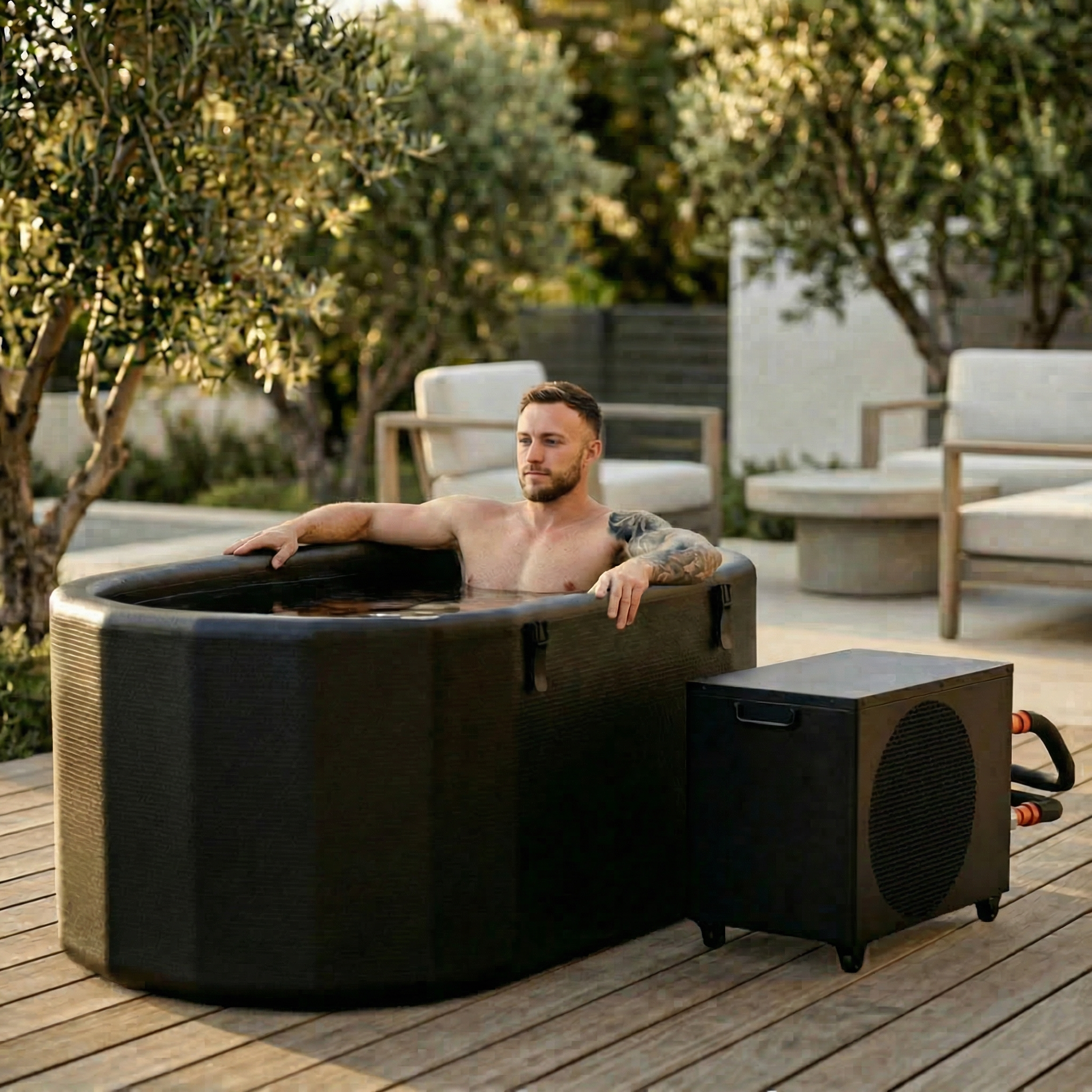
Best for: households that plunge several times a week and want stable water temperature. Skip if: you only plunge occasionally and do not want a powered system.
Best Affordable Cold Plunge with Chiller: Value Without Compromise
Budget matters, and the AZ-Adapt Bundle at $1,399.00 is the lowest-priced chiller option in our catalog. It pairs an adjustable 8-gauge aluminum adapter, extending up to 7 inches, with a 0.8 HP chiller. The adapter is designed for use with home bathtubs, stock tanks, chest freezers, and coolers, so you can convert gear you may already own.
The AZ-Inflate Bundle at $1,899.00 offers a 0.8 HP chiller with a PVC drop-stitch inflatable tub, which can be deflated and folded for storage. Cooling rates are manufacturer-stated at roughly 4-8°F per hour, and actual performance depends on water volume and room temperature.
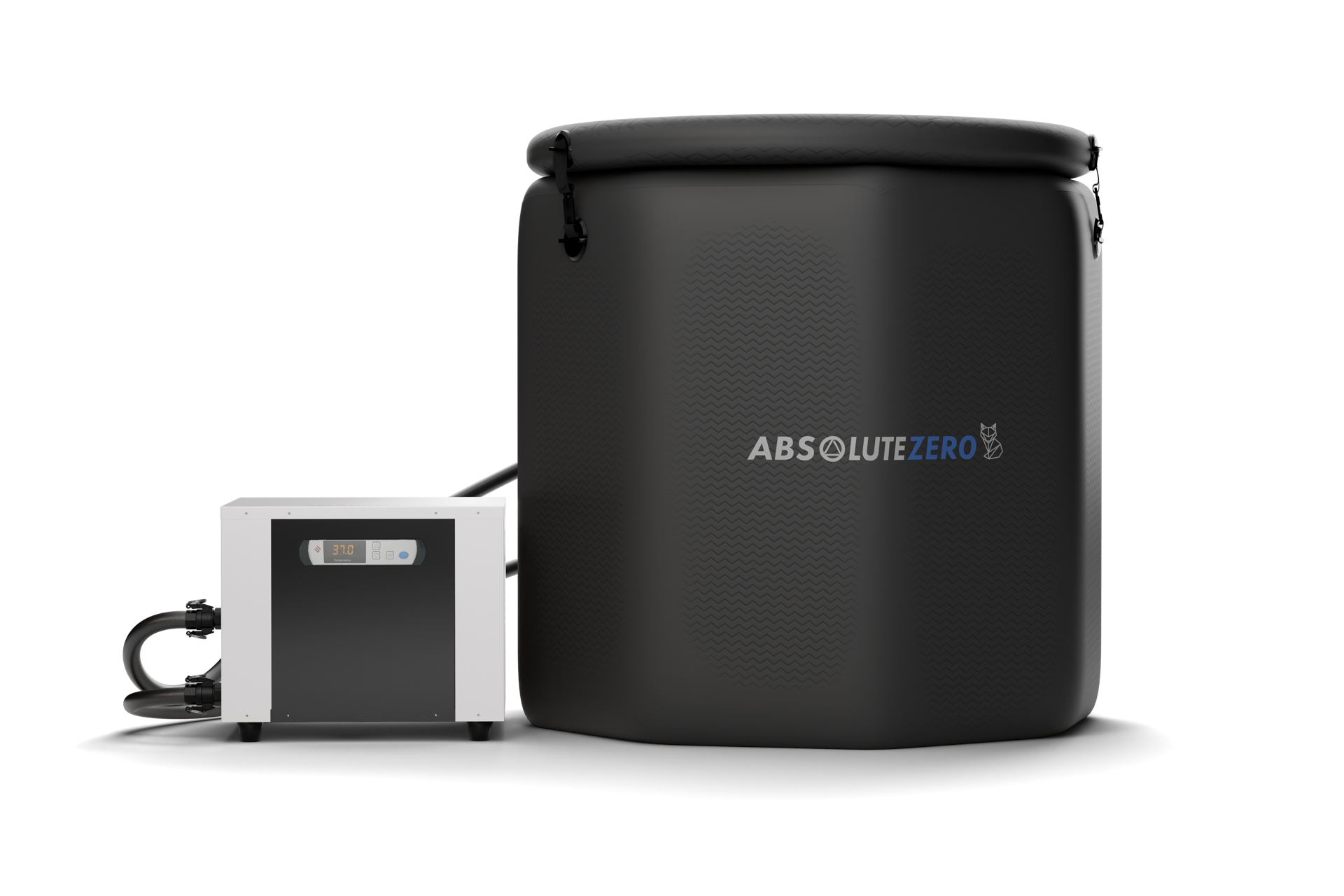
Watch out: check whether your bathtub or container fits the adapter before you buy, since fit varies by tub.
Cold Plunge Temperature for Recovery: What Range to Target
Temperature and timing are two separate dials, and most recovery mistakes come from setting one without thinking about the other. Get both right and a plunge becomes a predictable part of your week; get them wrong and you either blunt your training gains or quit because the water feels unbearable.
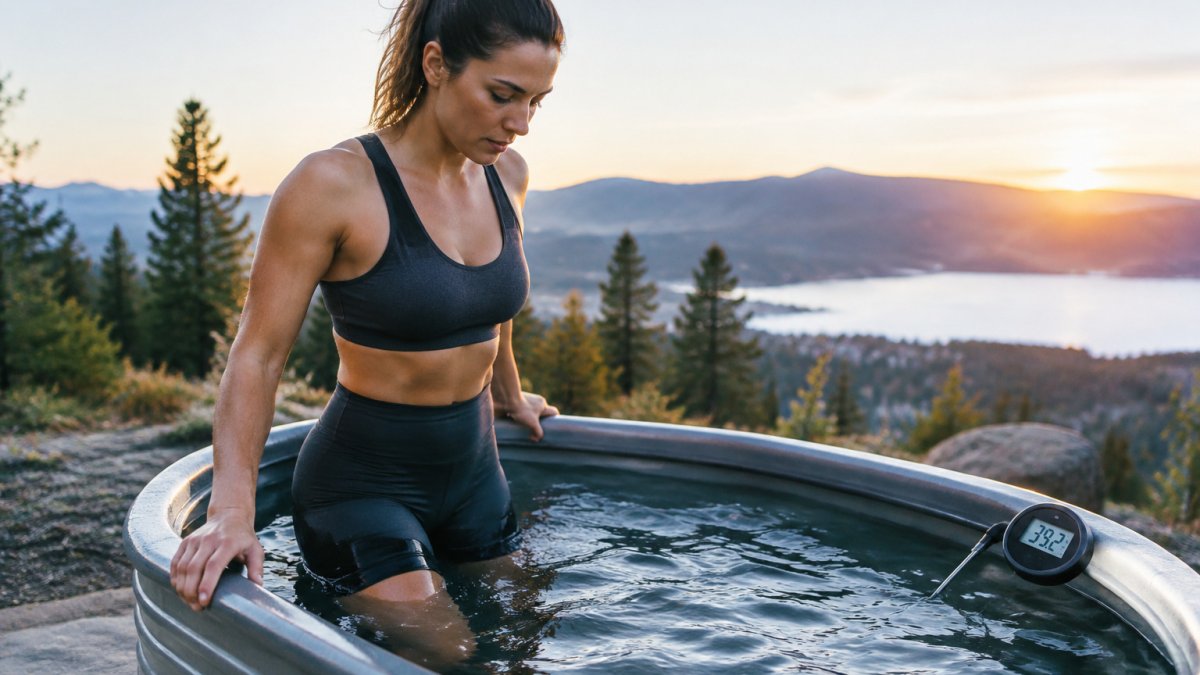
What water temperature to target
Many home users target a range in the low-to-mid 50s°F for routine sessions. The AZ-Inflate and AZ-Adapt bundles use a 0.8 HP chiller designed to reach temperatures as low as 37°F. Colder is not automatically better: water in the 40s°F feels sharp and shortens the time most people can comfortably stay in, so a 50-55°F tub you actually use beats a 38°F tub you dread.
A practical progression is to start at the warm end of your chiller's range, hold a fixed duration for a week or two, then lower the set point a few degrees at a time.
Timing cold immersion around strength training
This is where recovery goals diverge, and the right answer depends on what you are training for.
- If your priority is soreness relief between sessions: a plunge in the hours after training, or on a rest day, is the common pattern. Cold water constricts surface blood vessels and is widely used to take the edge off post-exercise soreness, which is the effect the Mayo Clinic Health System describes in its cold-water plunging overview Mayo Clinic Health System, Cold-water plunging health benefits.
- If your priority is building strength or muscle: be cautious about plunging immediately after lifting. Some research suggests cold-water immersion right after resistance training may interfere with certain strength adaptations, so many people separate the two when building muscle is the goal.
- If your priority is endurance or repeated same-day efforts: post-session cold immersion is more commonly used to speed perceived recovery before the next bout, though the 2024 review of cold-water therapy notes that optimal duration remains uncertain 2024 review of cold water therapy, PubMed Central.
A simple rule of thumb: plunge for soreness and schedule it away from the lifts you most want to grow from. If you are unsure which camp you are in, treat the plunge as a recovery tool on hard days and skip it on the days you are chasing a strength PR.
Duration, supervision, and when to check with a clinician
Keep sessions short and get out before you feel numb or start shivering hard. Never combine cold immersion with alcohol. Cold shock raises heart rate and blood pressure quickly, so people with cardiovascular conditions, uncontrolled high blood pressure, or pregnancy should talk to a clinician before starting. The same goes for anyone new to cold exposure: acclimation is gradual, and there is no prize for a longer or colder first session.
Watch out: the chiller's 37°F rating is a capability, not a recommendation, setting the tub to its coldest point on day one is the fastest way to make the habit feel punishing and unsafe.
Cold Plunge Maintenance and Water Care: Realistic Costs and Routines
The purchase price is the easy number to compare; the cost of owning a plunge is what separates a tub you keep for years from one that becomes garage clutter. Budget for four ongoing lines, electricity, water and sanitation, filters, and replacement parts, and the total cost of ownership becomes predictable.
Electricity: the largest recurring cost
Any chiller-equipped model draws power to hold temperature, and how much depends on the set point, room temperature, insulation, and how often the lid comes off. A well-insulated tub in a cool space runs its chiller far less than an uninsulated inflatable in a warm garage. The ThermoWood 1-Person Cold Plunge Tub requires no electricity at all, which eliminates this line entirely, at the cost of water that warms toward ambient between sessions.
To estimate your own electricity cost, find the chiller's rated wattage on its label, multiply by the hours per day it actually runs (not 24), divide by 1,000 to get kilowatt-hours, and multiply by your local utility rate per kWh. A chiller that runs a few hours a day at a few hundred watts is a modest monthly add; one that runs constantly in a hot garage is not.
Water, sanitation, and filters
Every plunge needs regular water care, and chilled systems need filtration to keep water clear, the RevX LUX chiller includes integrated filtration for exactly this reason. Plan to drain, clean, and refill on a schedule that matches your use: a household plunging several times a week will need more frequent water changes than an occasional user. For a closer look at whether plunging suits training recovery, read whether cold plunges are beneficial for runners. Unfiltered tubs need more frequent changes still.
Sanitation is the part owners underestimate. Even with filtration, water that sits warm and uncovered develops biofilm and odor, so most routines combine filtration with a sanitizer appropriate to the tub and a periodic deep clean of the shell and plumbing. Follow the manufacturer's water-care instructions for your specific model rather than improvising.
Filters and replacement parts
Filters are a consumable, they clog and need cleaning or replacing on a schedule tied to use. Beyond filters, budget for the parts that wear: pump and chiller components, fittings, and the tub shell or liner over time. That trade-off is the heart of total cost of ownership.
A simple way to compare total cost
Add up, over a three-year horizon: purchase price, estimated electricity, water and sanitizer, filters, and a realistic allowance for parts. The no-power ThermoWood tub trades a higher purchase price for near-zero electricity and no chiller maintenance, a different math entirely.
Watch out: the chiller's rated cooling rate and the tub's insulation together determine electricity use far more than the sticker price does, so compare those two specs before assuming the cheaper tub is cheaper to own.
How to Choose the Right Cold Plunge for Your Recovery Goals
Match the tub to your routine. If you train hard and plunge daily, a chiller-equipped permanent tub is the practical choice. If you want a flexible, lower-cost setup, the inflatable or adapter bundles work well. If you want an outdoor, no-power option, the ThermoWood tub fits that need at a higher price.
Check the footprint before buying. The XXL Inflatable Cold Plunge Tub measures 59 x 31.5 x 25.6 inches and fits taller users up to 6 feet 9 inches, which makes it a good choice if you plunge with a partner. Smaller setups suit apartments and garages.
Choosing Your Cold Plunge Setup: Next Steps with Serenity Lane USA
Start by deciding how often you will plunge, how much space you have, and whether you want a chiller. Then compare the options above against those answers. Serenity Lane USA offers chiller-equipped and no-power cold plunge options, so you can pick the setup that fits your recovery routine. Browse the full cold plunge collection to compare what is available.
Frequently Asked Questions
Are cold plunges good for recovery?
Research on cold-water immersion is still developing, and the optimal duration and other parameters remain uncertain. Timing around strength training can matter. Treat a cold plunge as one recovery tool alongside sleep, nutrition and programming, and adjust based on how your body responds.
How cold should a cold plunge be for recovery?
Many home setups target a water temperature in the 50°F to 59°F range for recovery sessions, and no single ideal temperature has been established. The Serenity Lane USA AZ-Inflate and AZ-Adapt bundles include a 0.8 HP chiller designed to reach water temperatures as low as 37°F, giving you room to dial in a range that feels right. Actual cooling depends on water volume, starting temperature and ambient conditions, so monitor the water with a thermometer during each session.
How long should you stay in a cold plunge for recovery?
No single optimal duration has been confirmed. Many people start with short sessions of a few minutes and build up gradually while watching for discomfort. Avoid staying in the water to the point of shivering, numbness or dizziness, and exit promptly if you feel unwell. Because cold immersion can affect people differently, discuss use with a clinician if you have heart, circulatory or other health concerns.
Is a cold plunge with a chiller better than an ice bath?
A chiller keeps water cold on demand, so you avoid repeatedly buying and hauling ice. The Serenity Lane USA AZ-Adapt Cold Plunge Chiller Bundle, priced at $1,399.00, pairs an adjustable aluminum adapter with a 0.8 HP chiller, while the AZ-Inflate Bundle at $1,899.00 combines an inflatable tub with the same chiller. Ice baths require ongoing ice purchases and manual temperature control, while chilled systems keep water at a set temperature on demand.







