


How Strong Should Red Light Therapy Panel Intensity Be?
Last Updated: November 19, 2026
Quick Summary
Red light panel intensity is measured as irradiance in mW/cm², and recommended therapeutic levels generally fall between 20 and 100+ mW/cm². Irradiance drops as you move away from the panel, so check the stated distance before comparing. Dose equals irradiance times session time, so a stronger panel can reach the same dose in less time.
- Check irradiance in mW/cm², not wattage, because wattage measures power drawn from the wall.
- Dose in J/cm² equals irradiance multiplied by time in seconds, divided by 1,000.
- A panel at 50 mW/cm² for 10 minutes delivers 30 J/cm²; a 100 mW/cm² panel reaches that in 5 minutes.
- Irradiance falls with distance; 50 mW/cm² at 6 inches drops to 12.5 mW/cm² at 12 inches.
- Confirm whether a stated irradiance is peak or average and the distance it was measured at.
Table of Contents
- Why Red Light Panel Intensity Matters More Than Wattage
- Irradiance, Dose and Energy Density Explained Simply
- Red Light Therapy Panel Distance and How It Changes Intensity
- Red Light Therapy Session Duration for Each Goal
- How Often to Use a Red Light Panel and What Frequency Hz Means
- Step-by-Step: Setting Your Intensity for Skin, Muscle and Joint Goals
- How to Verify Panel Output and Compare Manufacturer Specs
- Signs Your Intensity Is Too High and What to Do
- Start Your Intensity Plan with the Right Panel
- Frequently Asked Questions
Why Red Light Panel Intensity Matters More Than Wattage
Most shoppers compare red light panels by wattage, but wattage tells you how much power a panel draws from the wall, not how much light reaches your skin. Irradiance, measured in mW/cm², is the figure that actually matters for your results, which is why red light panel intensity is the number to check first. The panel's delivered intensity at a set distance is the number to check before anything else. The red light therapy panel market is valued at USD 1.11 billion in 2026 and is projected to reach USD 1.95 billion by 2030, according to Research and Markets' 2026 Red-Light Therapy Panel Market Report, so plenty of products are competing for your attention on spec sheets.
Wattage is an input, and a high-wattage panel can still deliver modest light if its LEDs are spread across a large surface. Irradiance is the output that reaches the skin. Recommended levels for therapeutic use generally fall between 20 and 100+ mW/cm², according to Atria Health Library's guidance on therapeutic light intensity.
If you want background on the broader topic, our complete guide to red light therapy for skin rejuvenation covers the basics in more detail.
Irradiance, Dose and Energy Density Explained Simply
Irradiance is the light power landing on a surface at a given moment, measured in milliwatts per square centimeter (mW/cm²). Dose, or energy density, is the total energy delivered over time, measured in joules per square centimeter (J/cm²). The relationship is fixed: dose equals irradiance multiplied by exposure time, with time expressed in seconds and the result divided by 1,000 to convert milliwatts to joules.
The formula, written out, is:
Dose (J/cm²) = Irradiance (mW/cm²) × Time (seconds) ÷ 1,000
That single line resolves most of the confusion in this category. A panel rated at 50 mW/cm² at your chosen distance, run for 10 minutes (600 seconds), delivers 50 × 600 ÷ 1,000 = 30 J/cm². The same panel run for 20 minutes delivers 60 J/cm². A stronger panel at 100 mW/cm² reaches that same 30 J/cm² in just 5 minutes. None of those sessions is inherently better, they are different combinations of the same two variables, and the dose is what the tissue actually receives.
Worked examples you can copy
- Gentle, longer session: 25 mW/cm² × 900 seconds (15 minutes) ÷ 1,000 = 22.5 J/cm².
- Moderate, standard session: 50 mW/cm² × 600 seconds (10 minutes) ÷ 1,000 = 30 J/cm².
- High-output, short session: 100 mW/cm² × 300 seconds (5 minutes) ÷ 1,000 = 30 J/cm².
Notice that the second and third examples land on the same dose through opposite routes. This is why comparing panels by session length alone tells you almost nothing, and why a panel's advertised wattage is even less useful, wattage is draw from the wall, not light on your skin.
The assumptions behind the math
The calculation is only as good as the irradiance figure you plug into it, and that figure carries three assumptions worth stating plainly:
- The number is measured at your actual distance. Irradiance falls sharply as you move away from the panel, so a spec measured at 6 inches does not describe a session at 18 inches.
- The number is an average across the treated area, not a peak hotspot. Many panels are brightest at the center and dimmer toward the edges, so the dose at the center of your treatment area can exceed the dose at the perimeter.
- The number reflects delivered light, not electrical input. A panel can draw significant wattage and still spread modest irradiance across a large surface.
Where the math breaks down
Manufacturer irradiance figures are frequently measured with a meter at a single point, often close to the panel, and sometimes reported as a peak rather than an average. A common pattern is for advertised irradiance to be measured at a shorter distance than the one most people actually use, which makes the real-world dose lower than the label implies. Treat any stated figure as an upper-bound estimate until you confirm the measurement distance and whether it is peak or average.
Clinical session lengths in the published literature typically run about 5 to 20 minutes per body area, according to Atria Health Library's standardized session length guidance, which gives you a reasonable planning range. But the dose those sessions produce depends entirely on the irradiance at the treated distance, which is why the next step is learning to verify what a panel actually delivers rather than trusting the box.
If you want the broader context on how these variables fit together, our complete guide to red light therapy for skin rejuvenation covers the fundamentals in more detail.
Red Light Therapy Panel Distance and How It Changes Intensity
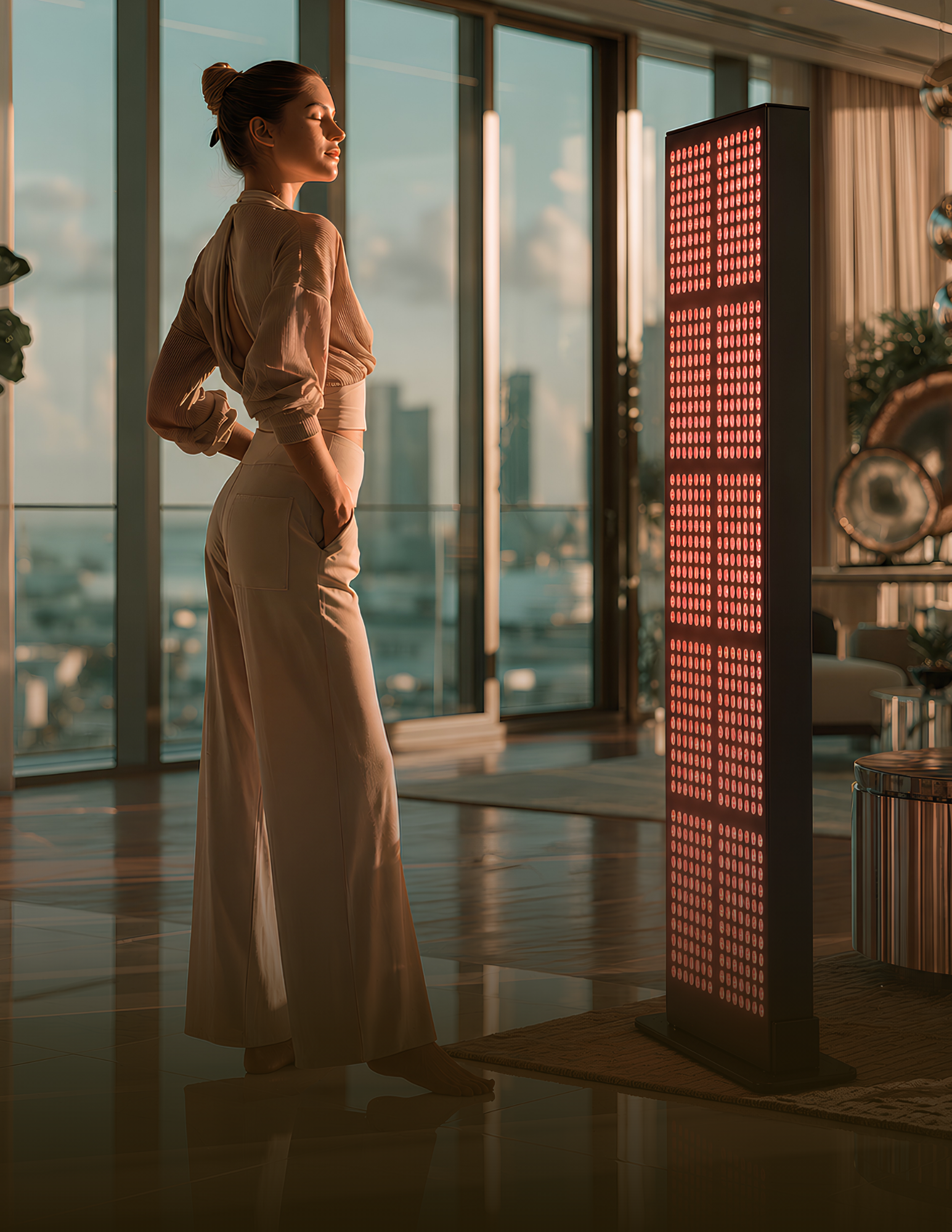
Distance is the easiest variable to change and the one that most affects intensity. Light spreads as it travels, so irradiance drops as you move away from the panel. A panel delivering 50 mW/cm² at 6 inches delivers 12.5 mW/cm² at 12 inches and 5.5 mW/cm² at 18 inches, according to Freedom Fit Fuel's August 2026 panel intensity guide.
High-output panels generally achieve peak stimulation at 6 to 12 inches, according to The Elixir Wellness guidance on panel distance. Moving closer raises intensity but narrows coverage, so most people adjust distance to balance the two.
Red Light Therapy Session Duration for Each Goal
Session length should follow your goal and the intensity you're using. Lower-intensity panels usually need longer sessions to reach the same dose, while higher-intensity panels reach it faster. Clinical trials have shown measurable improvements with roughly 10 to 12 minutes a day, twice per week, according to a 2026 study published in Cureus.
For skin goals, shorter sessions at moderate intensity are a sensible starting point. For muscle and joint goals, you may tolerate and benefit from slightly longer exposure, though the same principle applies: start at the low end and increase gradually.
How Often to Use a Red Light Panel and What Frequency Hz Means
Frequency in red light therapy usually refers to how many sessions you do per week, not the Hz rating some devices print on their labels. Hz describes how quickly an LED flickers, and it has little to do with how often you should treat yourself. Many users find a consistent routine of a few sessions per week easiest to maintain.
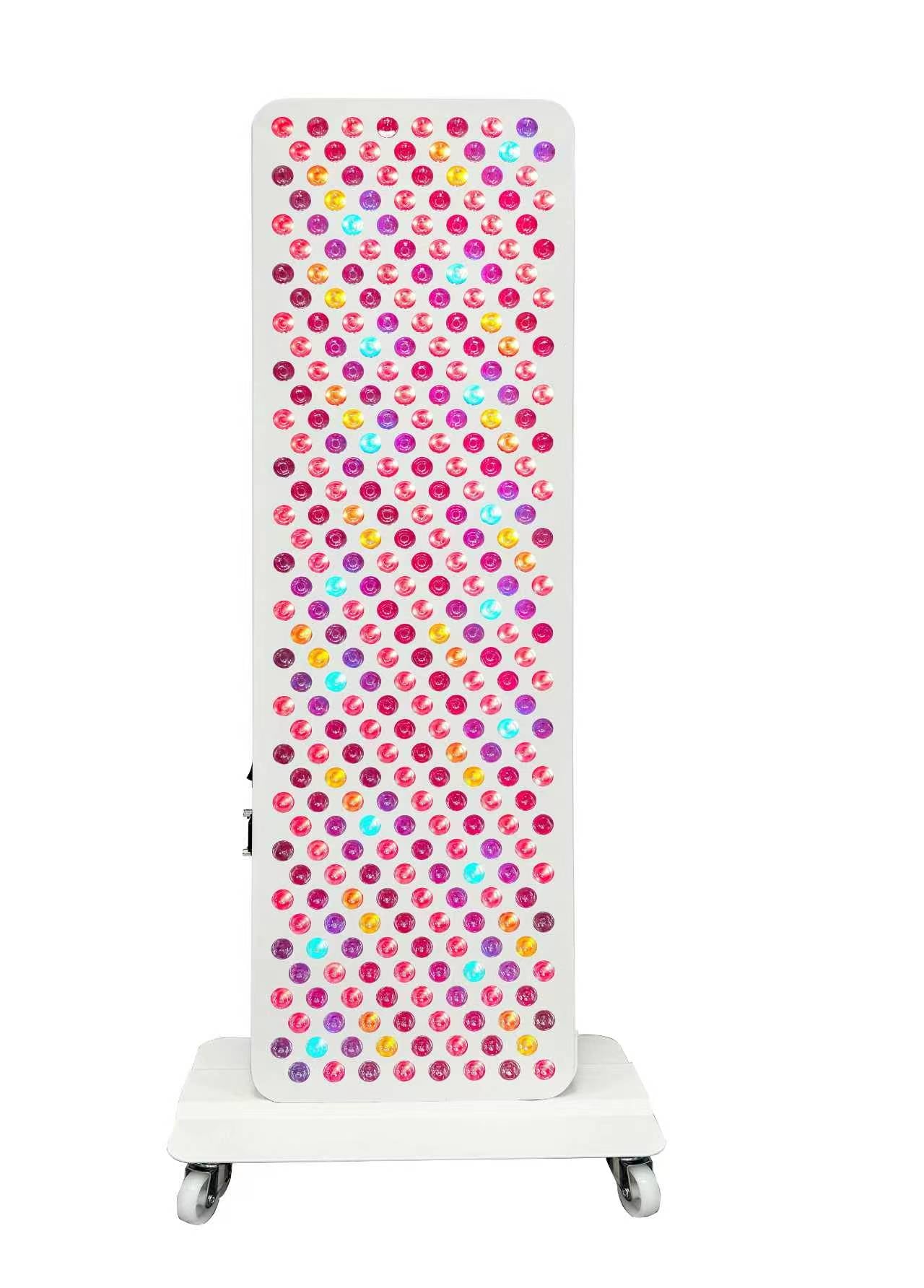
Consistency matters more than daily intensity. A steady routine at a moderate dose usually beats sporadic sessions at high output.
Step-by-Step: Setting Your Intensity for Skin, Muscle and Joint Goals
- Identify your goal: skin, muscle, or joint.
- Check the panel's stated irradiance at a specific distance, not just its wattage.
- Choose a starting distance, typically 12 inches for a first session.
- Set the timer for 5 to 10 minutes.
- Note how your skin or muscles respond over the next 24 hours.
- Increase time or move closer only if you feel comfortable and see no irritation.
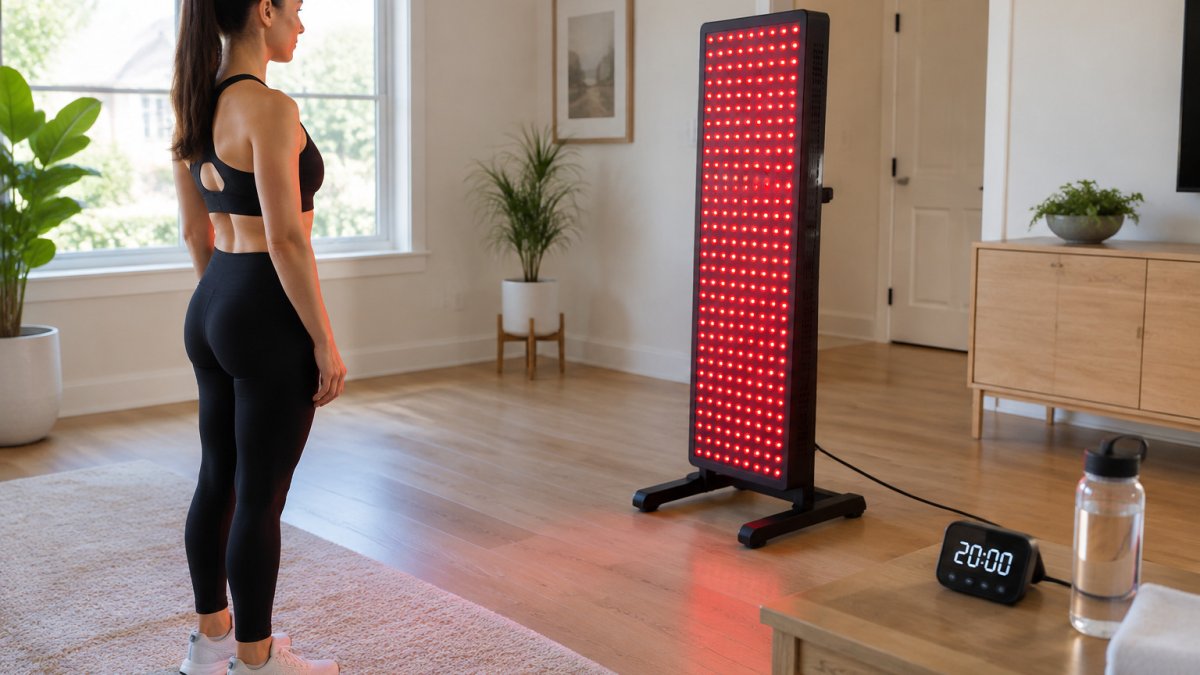
!Person standing a measured distance from a freestanding red light panel in a bright home room, timer visible nearby
Calculating Your Exposure Dose
To estimate your dose, multiply the irradiance at your chosen distance by the session length in seconds, then divide by 1,000 to convert to J/cm². For example, 12.5 mW/cm² for 600 seconds gives roughly 7.5 J/cm². This simple calculation lets you compare settings on a common scale rather than guessing.
How to Verify Panel Output and Compare Manufacturer Specs
Spec sheets are not standardized, so two panels can advertise the same irradiance number and deliver very different amounts of light to your skin. The only way to compare fairly is to normalize every figure to the same conditions: the same distance, the same measurement type (peak versus average), and the same treated area.
The four questions to ask of any spec sheet
- At what distance was irradiance measured? A figure without a distance is close to meaningless. Six inches and 18 inches can differ by a factor of several.
- Is the number peak or average? Peak irradiance describes the brightest point on the panel; average describes the typical output across the surface. Average is the more honest number for planning a session.
- What area does the panel cover at that distance? A high irradiance concentrated in a small footprint may deliver less total energy to a large treatment area than a lower-irradiance panel with broad coverage.
- Which wavelengths, and at what proportion? A panel listing five wavelengths may run them at very different power levels. Ask whether the stated irradiance is the combined output or the output of a single wavelength.
How to measure a panel yourself
A handheld optical power meter with a sensor calibrated for the relevant wavelengths (roughly 630-850 nm for most red and near-infrared panels) lets you check real-world output. The practical procedure:
- Set the panel to the intensity and distance you actually plan to use.
- Hold the sensor at the center of the treatment area, facing the panel, and record the reading.
- Repeat at the edges and corners of your intended treatment area to see how evenly the panel spreads light.
- Repeat at two or three distances (for example, 6, 12, and 18 inches) to build a distance-versus-irradiance curve for your panel.
Most consumer meters have real limitations: sensor size, calibration accuracy, and the difficulty of measuring a large panel from a single point all introduce error. A meter reading is best treated as a relative check, useful for comparing your own settings over time, rather than an absolute laboratory measurement.
Comparing panels on a like-for-like basis
Once you have normalized the figures, comparison becomes straightforward. Our 3600W Red Light Therapy Panel with 5 Wavelengths and Adjustable Intensity lists a stated irradiance of up to 156 mW/cm² at 6 inches, with five wavelengths from 630 nm to 850 nm. Our 1000W Red Light Therapy Panel with 660nm Red and 810-850nm Near-Infrared Light is a simpler two-wavelength setup, priced at $2,950.00. For shoppers who want adjustable intensity across multiple wavelengths in a smaller footprint, the NiceBeam LumaSpectrum 9 Pro Red Light Therapy Panel offers nine wavelengths and a remote control, priced at $1,099.00.
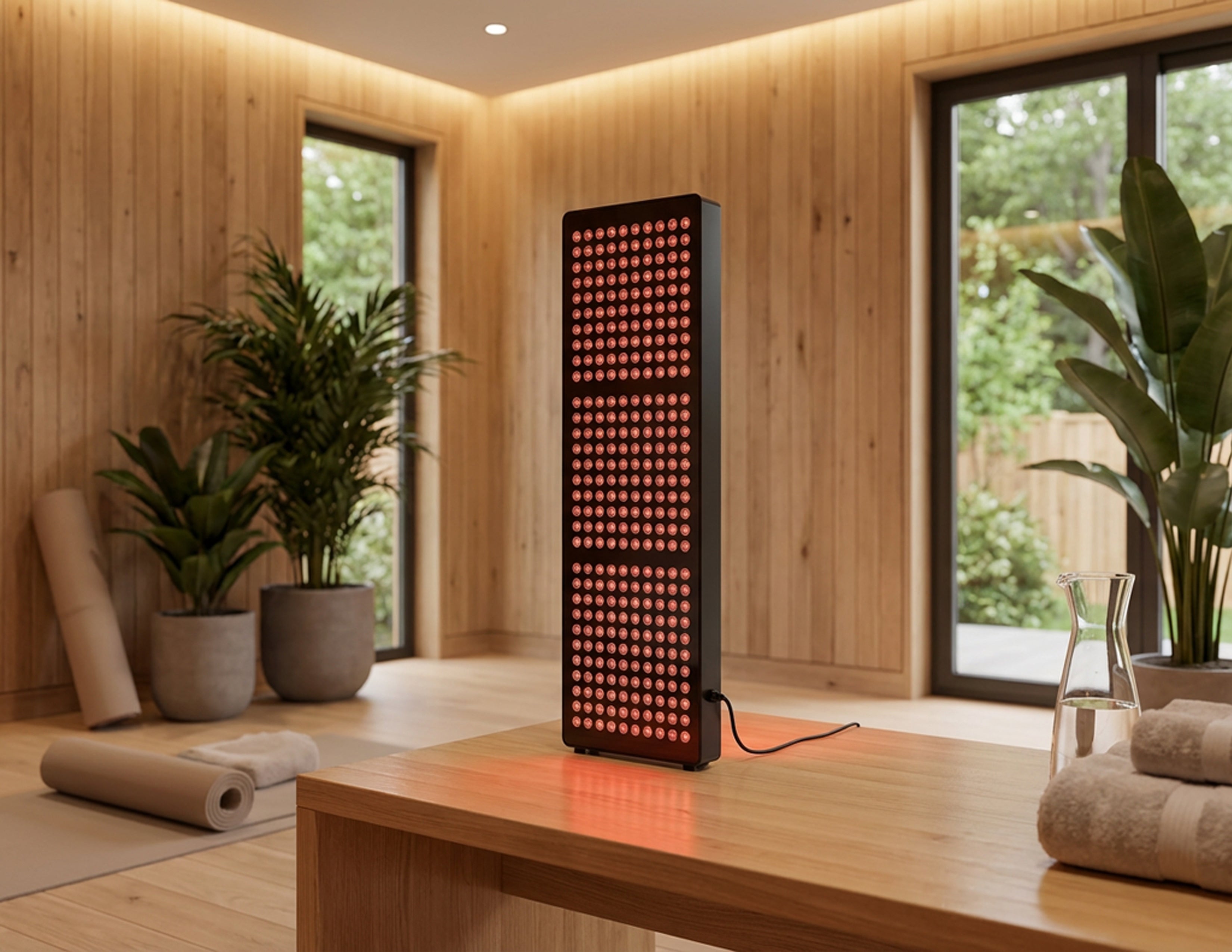
Best for: Shoppers who want to compare stated irradiance across measured distances before buying.
A quick normalization checklist
Before you compare two panels, put both spec sheets through the same filter:
- Convert every irradiance figure to mW/cm² at a common distance (interpolate if the manufacturer only lists one distance).
- Note whether each figure is peak or average, and discount peak figures accordingly.
- Multiply irradiance by the panel's stated coverage area to estimate total light delivered, not just intensity at a point.
- Check the wavelength list and whether the irradiance figure covers all wavelengths or one.
Watch out: a panel with a very high peak irradiance at 6 inches can look superior on paper while delivering less usable light across a large treatment area than a broader, lower-peak panel, always compare total delivered light, not just the headline number.
Spec sheets are not standardized, so the same irradiance figure can mean different things. Here are the key questions to ask of any panel.
| Check | Why it matters | What to look for |
|---|---|---|
| Measurement distance | Irradiance drops with distance | A stated distance, e.g. 6 inches |
| Peak or average | Peak overstates usable light | Average across the surface |
| Coverage area | Intensity alone misses total light | Area covered at that distance |
| Wavelengths | Output may vary by wavelength | Whether irradiance covers all wavelengths |
Signs Your Intensity Is Too High and What to Do
Watch for redness that lingers beyond an hour, skin that feels hot or irritated, or headaches after sessions. If you notice any of these, reduce your distance, shorten your session, or pause until your skin settles. Starting too strong is a common mistake.
Watch out: moving a panel closer to "speed up" results can overshoot your intended dose quickly, since irradiance rises sharply at shorter distances.
Start Your Intensity Plan with the Right Panel
Choosing intensity is a balance of output, coverage, and routine. Decide your goal, confirm the stated irradiance at a realistic distance, and pick a panel whose coverage fits your space. Our team at Serenity Lane USA can help you compare options, and you can browse the full red light therapy panels collection to find one that fits your routine.
Frequently Asked Questions
What intensity should red light therapy be?
Panels list output in a wide range of irradiance values, and the distance at which each figure is measured matters. Lower-output panels usually need longer sessions to deliver the same total dose, while higher-output panels reach a given dose in less time. Start at a lower intensity setting and increase gradually while watching how your skin responds.
How far should I sit from the red light therapy panel?
Distance matters because irradiance drops as you move away from the light source. A panel delivering 50 mW/cm² at 6 inches delivers about 12.5 mW/cm² at 12 inches and about 5.5 mW/cm² at 18 inches, . Check the manufacturer's stated distance and adjust your session length to match.
Is 10Hz or 40Hz better for red light therapy?
Frequency settings on some devices refer to pulsing of the light, and specific Hz values are not a reliable basis for comparing panels. Panels are better judged on irradiance, dose and consistency of use than on a Hz claim.
How do I determine the correct dosage for skin rejuvenation?
A practical approach is to combine intensity and time into a total dose. Session length should match your panel's measured output and your comfort. Choose a session length that matches your panel's measured output, begin at the low end, and increase only if your skin tolerates the treatment well.
What are the signs that my red light therapy intensity is too high?
Watch for redness that lingers beyond a short time after a session, a warm or stinging feeling, dryness, or irritation. Overexposure is more likely when intensity is high and sessions are long or too frequent. If you notice these signs, shorten the session, increase the distance from the panel, or pause use until your skin settles, and consult a clinician if irritation persists.
How can I tell if a red light therapy panel is high quality?
Look for specific, verifiable specifications: wavelengths such as 660 nm and 850 nm, a stated irradiance with the distance at which it was measured, a manufacturer-stated beam angle, and clear controls. Panels that publish irradiance at several distances, such as the NiceBeam LumaSpectrum 9 Pro, give you more data to compare output. Vague claims without measurement conditions are harder to check.
How do I know if a panel's irradiance claim is accurate?
Compare the stated irradiance to the distance it was measured at, since output falls sharply as distance increases. Where a manufacturer gives readings at several distances, you can check the drop-off yourself. Treat any single headline number with caution, and favor products that publish their measurement conditions and their specifications on the product page.
Can I use a red light panel every day?
Many users follow a routine of several sessions per week, and clinical references commonly describe sessions a few times weekly rather than continuous daily exposure. Daily use is not automatically unsafe, but more is not always better. Start conservatively, track how your skin responds, and reduce frequency if you notice irritation.







