


How to Recover From a Workout at Home: A Step-by-Step Plan
Last Updated: November 25, 2026
Quick Summary
You recover from workout at home by cooling down, rehydrating, eating protein and carbs, and sleeping well. No equipment is required. The first 30 minutes matter most, but the real gains come from what you repeat daily.
- Walk slowly for 5 to 10 minutes after training to bring your heart rate down.
- Hold each stretch 20 to 30 seconds and breathe out as you settle into it.
- Most people recover from workout soreness in 24 to 72 hours.
- Aim for 20 to 30 grams of protein within an hour of finishing.
- Roll a towel into a firm cylinder and use it like a foam roller.
Table of Contents
- How do I recover from a workout at home?
- How to Recover Sore Muscles Faster
- What Helps Sore Muscles After Workout: A Timed Home Routine
- How to Recover From Muscle Fatigue Quickly
- How to Recover Faster From Workouts: Supplements and Nutrition
- Matching Your Recovery Plan to Your Workout Type and Intensity
- At-Home Recovery Tools Compared by Evidence, Cost, and Space
- Building Your Home Recovery Setup with Serenity Lane USA
- Frequently Asked Questions
How do I recover from a workout at home?
You recover from workout at home by cooling down, rehydrating, eating protein and carbs, and sleeping well. No equipment is required. The first 30 minutes matter most, but the real gains come from what you repeat daily.
Many people who train at home wonder why they stay sore. The answer is rarely a missing gadget. It is usually a missing routine.
Here is the good news: home recovery is simple. And it works.
The first 30 minutes after you finish
Start with 5 to 10 minutes of easy movement. Walk around the room. Pedal nothing, just move. This keeps blood flow up.
Then drink water. A lot of it. Muscle repair needs fluid, and most people finish a workout already behind.
Next, eat something with protein and carbs within about an hour. A shake, yogurt with fruit, or eggs on toast all work.
Keep this window calm. No scrolling, no rushing to the next task. Your body is switching from work mode to repair mode.
How to Recover Sore Muscles Faster
You recover sore muscles faster by moving gently, sleeping enough, and eating well. Muscle soreness, or delayed-onset muscle soreness, peaks a day or two after hard training. Light activity and good food speed the process.
A review of post-exercise recovery techniques found massage and cold therapy were among the most effective methods for reducing inflammation, and massage worked best for soreness.
So what helps sore muscles after a workout? Three things, in order:
- Gentle movement, not bed rest
- Sleep, 7 to 9 hours (How Much Sleep Do Adults Need?)
- Protein and water, every few hours
Soreness or injury? How to tell the difference
Normal soreness is dull, spread across a muscle, and fades in 1 to 3 days. It shows up hours after training, not during it.
Injury feels different. Watch for sharp pain, swelling, or pain in one exact spot. If you cannot bear weight or move a joint, stop and get it checked.
Watch out: pushing through sharp pain can turn a small strain into a longer problem.
What Helps Sore Muscles After Workout: A Timed Home Routine
Here is a simple routine you can run without buying anything. It takes about 20 minutes and uses only items most homes already have: a towel, a wall, a chair, and a couple of books or a rolled blanket.
- Minute 0-5, Walk it down. Walk slowly around the room or up and down a hallway. Let your heart rate drop toward resting. Keep your breathing nasal and easy. This is not a second workout; it is a brake pedal.
- Minute 5-10, Stretch what you trained. Hold each stretch 20 to 30 seconds and breathe out as you settle into it. Tight areas first: calves and hips after cardio, chest and lats after pushing, hamstrings and glutes after leg day. Use a wall for a chest stretch, a chair for a hamstring stretch, and a doorway for a lat stretch. Do not bounce.
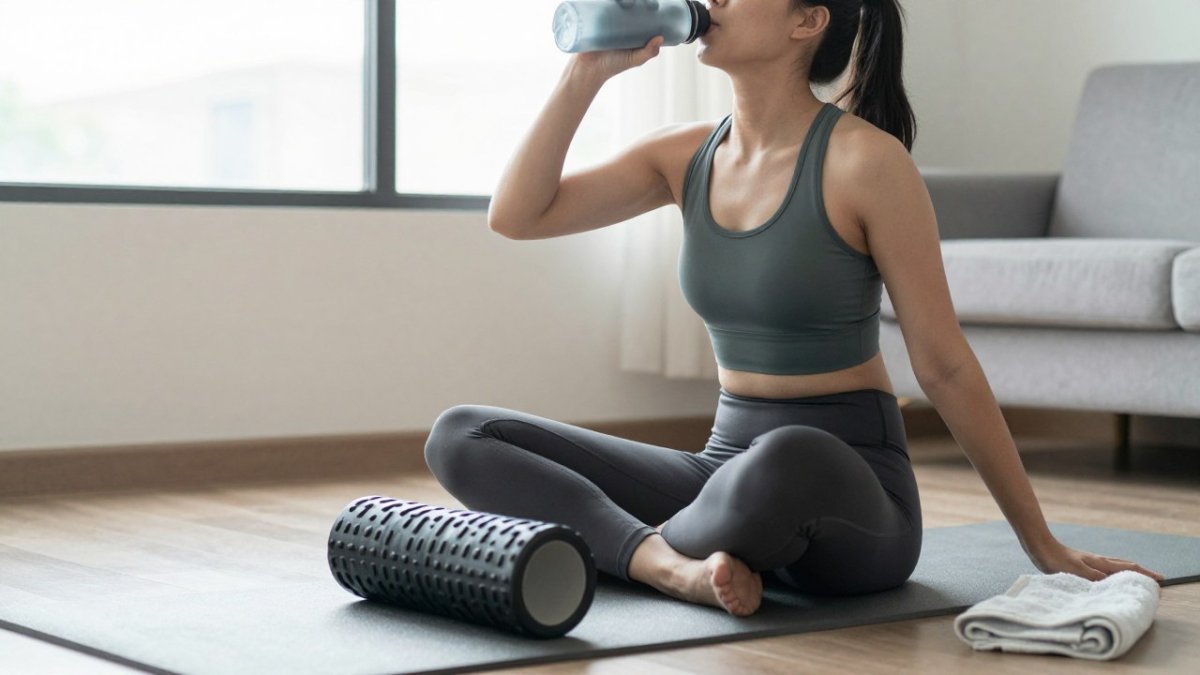
- Minute 10-15, Self-massage with what you own. Roll a towel into a firm cylinder and use it like a foam roller on quads, calves, and upper back. Use your thumbs in slow circles on tender spots for 30 to 45 seconds each. Keep pressure at a 5 or 6 out of 10, if you are wincing, you are pressing too hard.
- Minute 15-20, Downshift your breathing. Lie on your back with knees bent, one hand on your belly. Breathe in through your nose for a count of four, out for a count of six, for 10 to 15 rounds.
- Later, Eat, hydrate, sleep. Get protein and carbs within about an hour, keep water nearby through the evening, and go to bed on time. The routine above is the on-ramp; food and sleep are the highway.
Scale it to the session. After an easy walk or yoga, minutes 0-10 are enough. After heavy strength or intervals, run the full 20 minutes and add a second short walk later in the day. After a long endurance session, prioritize minutes 0-5 and 15-20, then eat and rest.
Adapt it to your space and body. In a small apartment, the walk becomes marching in place and the stretches happen against a wall or doorframe. If you have limited mobility, do the breathing and self-massage seated in a chair and skip floor work. If you are older or returning from a layoff, hold stretches 15 seconds instead of 30 and keep self-massage pressure light.
Watch out: stretching a muscle to the point of sharp pain, or foam-rolling directly over a joint or an inflamed area, can make soreness worse rather than better.
If you want to know whether a home sauna is worth adding, our guide on whether a sauna helps muscle recovery covers the evidence.
A realistic recovery timeline
Most people recover from workout soreness in 24 to 72 hours. Sleep and food shorten it. Dehydration and poor sleep stretch it out.
- First hour: cool down, rehydrate, eat protein and carbs.
- Rest of the day: light movement, water, normal meals, on-time bed.
- Next 24-48 hours: gentle activity, 7 to 9 hours of sleep, protein at each meal.
- 48-72 hours: soreness should be fading; if it is not, treat it as a signal to back off.
Plan your next hard session for when soreness is mostly gone, not when it is at its worst.
How to Recover From Muscle Fatigue Quickly
You recover from muscle fatigue quickly with rest, fluids, and a smart next session. Fatigue is your body asking for a break, not a sign of weakness.
The American College of Sports Medicine describes recovery as a broad routine: nutrition, hydration, sleep, and activity. No single tool replaces those basics.
Quick wins:
- Take a 20-minute nap if you slept badly
- Drink water with electrolytes after heavy sweating
- Lower training intensity for one session
- Eat within an hour of finishing
How to Recover Faster From Workouts: Supplements and Nutrition
Nutrition does more for recovery than any supplement. Protein repairs muscle. Carbohydrates refill glycogen, the fuel your muscles burn. Water and electrolytes replace what you sweat out.
A simple plate after training:
- 20 to 30 grams of protein
- A serving of carbs, like rice, fruit, or bread
- A large glass of water
If you are weighing cold therapy, our article on whether cold plunges benefit runners breaks down what the research says.
Matching Your Recovery Plan to Your Workout Type and Intensity
Your recovery should match your training. A light walk needs little. A hard leg day needs more. The table below is a starting point; the notes under it explain what changes as intensity rises.
| Workout Type | Recovery Focus | Time Needed |
|---|---|---|
| Easy walk or yoga | Hydration, light stretch | 10 minutes |
| Moderate cardio | Water, carbs, sleep | 30 minutes |
| Heavy strength | Protein, rest, gentle movement | 24-48 hours |
| Long endurance | Electrolytes, carbs, full rest day | 48 hours |
| Interval training | Easy movement, carbs, extra sleep | 24-36 hours |
| Beginner's first workouts | Gentle movement, patience, extra rest | 48-72 hours |
Strength training. The damage is mechanical, so protein and sleep do most of the work. Aim for 20 to 30 grams of protein within an hour and again at your next meal. Gentle movement on the day after keeps blood flowing without adding load. If you trained legs to failure, expect 48 hours before the same muscles are ready for another hard session.
Cardio and intervals. The cost is fuel and fluid. Replace what you sweated: water plus electrolytes after heavy sweating, and carbs to refill glycogen. Interval sessions hit the nervous system as well as the muscles, so add sleep before you add another hard session.
Long endurance. Glycogen depletion and dehydration are the main debts. Eat carbs within the first hour, drink with electrolytes, and take a full rest day rather than an active one if you feel flat.
Beginner workouts. New training creates more soreness than familiar training at the same effort. Expect 48 to 72 hours of soreness after your first few sessions and space hard days further apart until your body adapts.
Weekend warriors. One hard session after a week of sitting is a recipe for sore calves and hips. Warm up longer, recover more deliberately, and consider splitting the weekend effort across two moderate sessions instead of one maximal one.
Watch out: if soreness is not fading after 72 hours, or it comes with swelling, dark urine, or weakness, stop training and get it checked, that pattern is not normal recovery.
At-Home Recovery Tools Compared by Evidence, Cost, and Space
Here is how the common options stack up:
| Tool | Evidence | Cost | Space |
|---|---|---|---|
| Foam roller | Good for soreness | Low | Small |
| Massage chair | Good for tension and soreness | High | Large |
| Cold plunge | Good for inflammation | Medium to high | Medium |
| Infrared sauna | Mixed, helps relaxation | High | Large |
If you are comparing massage chairs, our roundup of the best home massage chairs for neck pain can help you choose.
Building Your Home Recovery Setup with Serenity Lane USA
Start small. A mat, a water bottle, and a foam roller cover most needs. Add bigger equipment only when you will use it daily.
For a dedicated space, our guide to home wellness room design ideas shows layouts that actually get used.
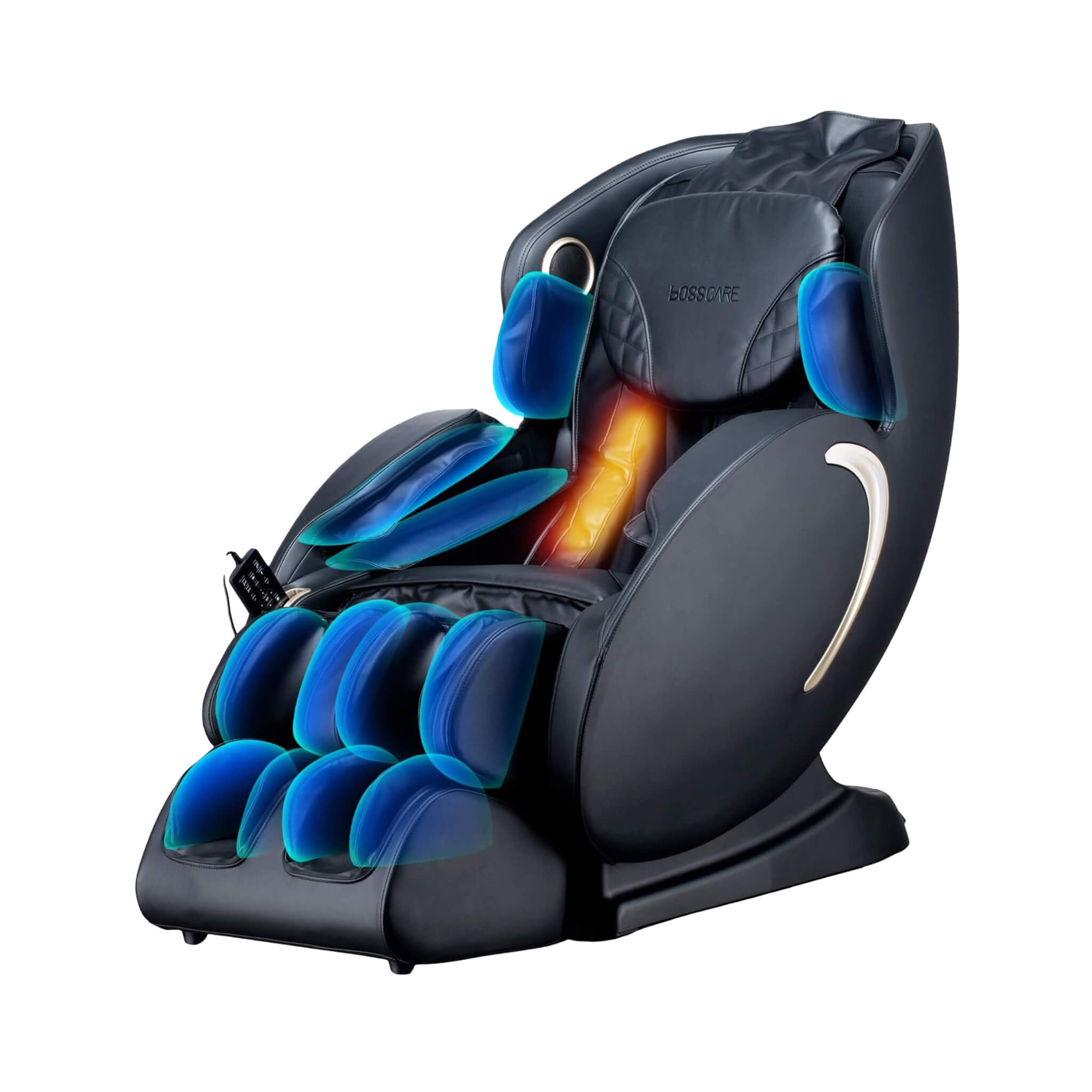
When you are ready for a massage chair, the Full Body 3D Zero Gravity Shiatsu Massage Chair with App & Voice Control offers 3D rollers, zero-gravity reclining, and backrest heating. It fits a home recovery routine without a spa visit.
At Serenity Lane USA, we stock professional-grade wellness equipment built for daily use. Free shipping is available on most orders within the continental U.S., and returns are accepted within 30 days.
Recovery is not a luxury. It is the part of training that makes you stronger. Build one small routine this week and repeat it.
Serenity Lane USA helps you build that routine at home, with durable equipment and free shipping on most orders. Get started with Serenity Lane USA and turn rest into part of your training plan.
Frequently Asked Questions
What is the quickest way to recover after a workout?
The fastest path combines a few basics done consistently. Rehydrate with water and electrolytes, eat protein and carbohydrates within a couple of hours, and get 7 to 9 hours of sleep. Gentle movement and stretching help blood flow without adding strain. No single tool replaces sleep and nutrition.
How can I recover sore muscles faster at home?
Start with light movement: a 10-minute walk or easy cycling raises blood flow to sore tissue. Follow with 10 to 15 minutes of self-massage using a foam roller or a massage chair, then stretch the muscles you trained. Drink water with electrolytes, eat a meal with protein and carbohydrates, and go to bed on time. The American College of Sports Medicine describes recovery as a well-rounded routine of nutrition, hydration, sleep, and activity rather than one product.
How long does muscle recovery take after exercise?
Delayed-onset muscle soreness typically peaks 24 to 48 hours after a strenuous workout and fades within three to five days. Muscle repair and glycogen replenishment continue beyond that window, which is why sleep and protein intake matter for days after a hard session. If soreness keeps you from walking normally or lasts more than a week, treat it as a possible injury and get it checked rather than pushing through.
Do I need recovery supplements to recover faster from workouts?
Most people do not. UW Medicine notes that most people can recover without specialized tools or products. Food covers the basics: protein for muscle repair, carbohydrates for glycogen replenishment, and water with electrolytes for hydration. Supplements are optional extras, not requirements. If you choose to use them, keep them secondary to sleep, nutrition, and hydration, which carry most of the recovery work.







